
Menu
Polished Concrete Flooring Options for Midland Homes
Concrete Flooring Midland
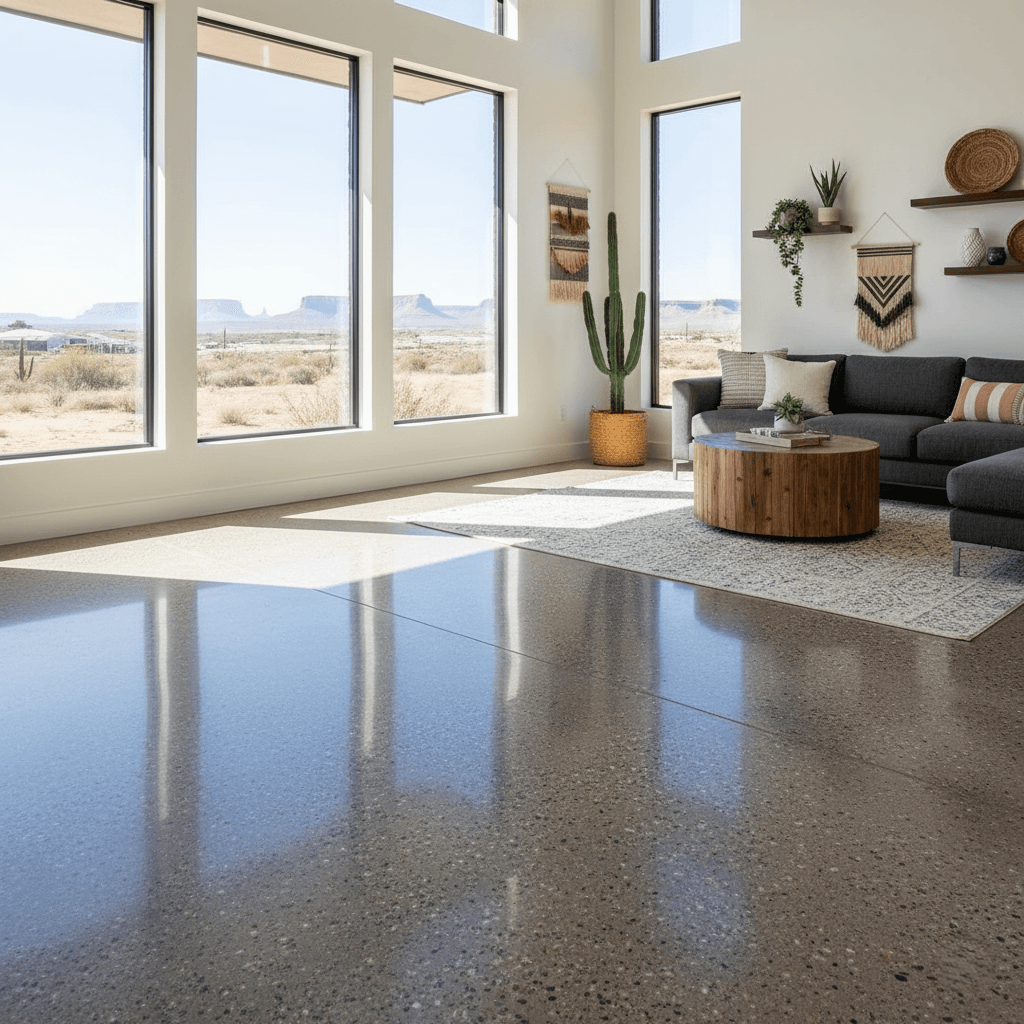
Modern Midland homeowners increasingly choose polished concrete flooring for its exceptional durability, low maintenance requirements, and stunning aesthetic versatility that complements both contemporary and traditional home designs. This innovative flooring solution transforms ordinary concrete slabs into sophisticated surfaces that rival natural stone while providing superior performance in West Texas climate conditions. We at Midland Concrete Services specialize in creating custom polished concrete floors that enhance your home’s value and provide decades of reliable service with minimal upkeep. Professional installation ensures optimal results that showcase the natural beauty of concrete while meeting the specific needs of your living spaces. Understanding the available options helps homeowners make informed decisions that perfectly match their style preferences and practical requirements.
Types of Polished Concrete Finishes
Cream Finish Polished Concrete
Cream finish polished concrete is the least expensive type of polished concrete finish and utilizes the surface layer of freshly laid concrete to produce smooth floors with slight color and texture variations. This type of finish works best on newly built homes with no surface defects, scratches, or stains. Cream finish polished concrete will last longer than any type of carpet, vinyl, or tile, because it has fewer seams where water can enter the floor. It is also easier to clean than carpet, tile, or wood.
Salt & Pepper Finish
Salt & pepper finish polished concrete is achieved by grinding the surface of the concrete to expose small aggregates. The ground aggregates produce speckled patterns, which add visual interest to any interior space. Salt & pepper finish polished concrete can be used in residential settings, but it is mostly used in commercial settings, such as shopping centers and restaurants.
Exposed Aggregate Finish
An exposed aggregate finish shows the large stones in the concrete mix and produces dramatic colors and textures that create eye-catching focal points in residential settings. Some of the largest stones in the world are produced in West Texas, so there are many beautiful colors and types of stones available to choose from.
Decorative Specialty Options
Stain Polished Concrete
Stain-polished concrete combines chemical or acid stains with polished concrete to produce a wide variety of colors and shades, from earth tones to bright, bold colors. Stain-polished concrete is one of the most popular types of polished concrete because of the endless color combinations, and it can be stained in any color imaginable.
Dye Polished Concrete
Dye-polished concrete is a method of dyeing the entire depth of the concrete to produce a uniform color and appearance. Dye-polished concrete is good for owners who want a uniform look and don’t want to worry about the color changing over time due to wear and tear. One of the main advantages of dye-polished concrete is that it will retain its color, regardless of how much the surface is scratched.
Scored Patterns
Scoring polished concrete is a decorative way to produce geometric patterns, borders, or other decorative elements that resemble tile, stone, or art on the polished concrete floor. Scoring polished concrete can be used alone or in conjunction with stained or dyed polished concrete to produce a wide variety of different looks and patterns.
Combination Techniques
By combining multiple techniques, owners can produce a wide variety of different floors to match their specific design vision and architectural style. Owners can combine stain and dye polished concrete to produce a floor that meets their specific design vision and architectural style.
Gloss Levels
Matte Finish Polished Concrete
Matte finish polished concrete is a subtle sheen that reflects little to no light. Matte finish polished concrete is great for homes and offices where glare reduction is important.
Satin Finish Polished Concrete
Satin finish polished concrete produces a moderate amount of light reflection and does not produce too much glare. Satin finish polished concrete is commonly used in living rooms, bedrooms, and other living areas.
High-Gloss Polished Concrete
High-gloss polished concrete produces a very high amount of light reflection and produces a lot of glare. High-gloss polished concrete is used to create a “wow” effect in entryways, kitchens, and formal dining areas.
Semi-Gloss Polished Concrete
Semi-gloss polished concrete produces a moderate to high amount of light reflection and produces a moderate amount of glare. Semi-gloss polished concrete is commonly used in residential applications for its balanced performance of durability and aesthetic appeal.
Gloss Level Choices
Owners should consider several factors when choosing a gloss level for their polished concrete floor. Higher gloss levels are more prone to showing scratches and wear patterns than lower gloss levels. However, higher gloss levels can also reflect light and reduce the need for artificial lighting in the interior of homes and businesses.
Slip Resistance
The slip resistance of a polished concrete floor depends on the gloss level and the texture of the surface. Matte and textured finishes have a higher slip resistance than high-gloss finishes.
Maintenance
Polished concrete floors require regular maintenance to keep them looking their best. Regular cleaning of the floors is required to remove dirt and debris that can cause scratching of the polished surface. Polished concrete floors also require periodic re-sealing every 2-4 years to maintain their stain resistance and surface integrity.
Costs
Basic polished concrete flooring costs anywhere from $4 to $8 per sq ft for cream finishes, while decorative options with staining, scoring, or exposed aggregates can cost anywhere from $12 to $18 per sq ft, depending on complexity. Costs associated with installing polished concrete flooring also depend on the condition of the existing slab. New construction provides the most cost-effective base for polished concrete flooring.
Value Proposition
The value proposition of polished concrete flooring is the long-term value it provides homeowners through reduced replacement costs, reduced maintenance costs, and increased property values through premium flooring upgrades.
Comparison of Polished Concrete Flooring to Other Flooring Options
Polished concrete flooring is typically less expensive than premium hardwood, natural stone, or high-end tile flooring and provides greater durability and longevity than those options.
Energy Efficiency Benefits
Polished concrete flooring also provides energy efficiency benefits through its thermal mass properties. These properties allow polished concrete flooring to help regulate indoor temperatures, reducing heating and cooling costs throughout the year.
Radiant Heating Systems
Radiant heating systems can be integrated with polished concrete flooring, making polished concrete flooring an excellent choice for radiant heating system installation in homes and buildings in West Texas.
Return On Investment (ROI)
In addition to the initial value proposition of reduced maintenance and replacement costs, polished concrete flooring provides additional ROI in the form of increased home values and long-term cost savings.
Midland Climate Conditions and Their Effect on Polished Concrete Flooring
UV Resistant
West Texas climate conditions create ideal conditions for polished concrete flooring to perform well and last long. The thermal mass properties of polished concrete flooring allow it to help regulate indoor temperature fluctuations caused by extreme heat, occasional freeze-thaw cycles, and low humidity.
Seasonal Performance Benefits
Polished concrete flooring is resistant to UV rays, preventing fading and color loss, even with extensive exposure to direct sunlight.
Winter Performance Benefits
During the summer months, polished concrete flooring remains cooler than other flooring options, providing comfortable walking surfaces for people and pets during extremely hot weather.
Moisture Reduction
Polished concrete flooring can be heated from underneath and is compatible with radiant heating systems, providing warm and comfortable walking surfaces during cold winter months.
Humidity Control
Polished concrete flooring also reduces dust and other airborne contaminants, keeping the interior air quality of homes and businesses clean and free from pollutants.
Interior Design Trends
Polished concrete flooring controls humidity in homes and businesses by absorbing excess moisture and releasing it slowly through evaporation, eliminating moisture-related problems that plague other flooring options.
Industrial Chic Aesthetics
Polished concrete flooring is currently a popular interior design trend among modern designers, due to its sleek, neutral color palette and versatility to complement both minimalist and eclectic design styles.
Traditional Home Integration
Polished concrete flooring can be paired with exposed beams, brick walls, and metal accents to create sophisticated urban loft appearances.
Color Coordination Options
Polished concrete flooring can be paired with traditional home decor elements, such as crown molding and ornate fixtures, to create a unique blend of old and new.
Room Specific Applications
Polished concrete flooring provides limitless color coordination options with the use of stains, dyes, and sealers to create a wide array of colors and tones to complement any interior design element.
Bedroom Applications
Polished concrete flooring is particularly beneficial in kitchen applications, due to its stain resistance, ease of cleaning, and seamless surface that eliminates crevices where bacteria can grow. Polished concrete flooring is also beneficial in bathroom applications, due to its waterproof, mold-resistant surface and slip-resistant texture.
Maintenance and Cleaning
Polished concrete flooring can be used in bedroom applications; however, it is recommended to use matte-finished polished concrete and warm-toned polished concrete to create a peaceful and relaxing environment.
Care Strategies
Daily maintenance of polished concrete flooring includes simply sweeping or vacuuming to remove loose dirt and debris that could potentially scratch the polished surface over time. Weekly cleaning of polished concrete flooring includes damp mopping with neutral pH cleaners specifically designed for polished concrete to maintain its appearance without damaging the polished surface. Every 2-4 years, polished concrete flooring requires re-sealing to maintain its stain resistance and surface integrity.
Re-Polishing Services
To protect polished concrete flooring, owners should place furniture pads under heavy furniture items, install area rugs in high-traffic areas, and quickly clean any spills that occur to prevent staining or damage to the polished surface.
Preventative Maintenance Programs
When polished concrete flooring becomes worn or damaged, re-polishing services can be performed to restore the original appearance of the polished surface.
Professional Inspection and Maintenance
Preventive maintenance programs can be established to inspect polished concrete flooring on a regular basis to catch any potential problems before they become costly repairs.
Installation Process and Timeline
Regular professional inspection and maintenance of polished concrete flooring can ensure that the polished surface continues to perform optimally and remains aesthetically pleasing throughout its extended lifespan.
Project Planning Considerations
The first step in the installation process is surface preparation. Surface preparation includes thoroughly cleaning the existing concrete and evaluating the condition of the concrete slab to determine what repairs are needed and whether or not the slab is ready to grind. Once the slab is cleaned and repaired, diamond grinding is done to prepare the surface for polishing. Multiple grits of diamond grinding are used to progressively refine the surface texture and expose the desired aggregate level. After grinding, the slab receives a chemical densification treatment to strengthen the concrete matrix and reduce porosity, resulting in a harder surface that accepts a higher polish level. Finally, the slab is polished to the desired gloss level and sealed with a protective sealer to enhance the durability and stain resistance of the polished surface.
Benefits of Using a Professional Contractor
The installation time frame for polished concrete flooring typically ranges from 3 to 7 days, depending on the size of the job, the desired finish complexity, and the condition of the existing slab. During the installation process, occupancy of the home or business is restricted to prevent dust contamination and ensure proper curing of chemical treatments applied during the process. If owners do not plan to vacate the premises, temporary accommodations must be made to accommodate the installation team and to protect the owner’s belongings.
Assessment and Problem Solving
Using a professional contractor for polished concrete flooring provides numerous benefits. Professional contractors have extensive knowledge of local soil conditions and building practices that affect the quality of the concrete slab and the outcome of the polished concrete flooring project near landmarks, such as the Brown-Dorsey Medallion Home and downtown Midland areas. Professional contractors also utilize specialized equipment and supplies, such as industrial diamond grinders, dust collection systems, and professional-grade sealers, to produce an optimal finished product that cannot be achieved with DIY methods. Additionally, professional contractors offer warranty protection and quality assurance to protect the homeowner’s investment and provide peace of mind with regard to the contractor’s workmanship and the quality of the materials used in the project.
Professional contractors assess the site prior to commencing work to identify potential issues that could arise during the project, such as substrate evaluations, moisture testing, and compatibility analysis with existing construction. They then develop and implement custom solutions to address unique challenges, such as irregular surfaces, embedded utilities, or special design requirements that require expertise and experience. After the project is complete, professional contractors continue to assist owners with maintenance guidance, warranty service, and consulting to maximize the floor’s performance and longevity. Professional contractors also ensure compliance with building codes, safety standards, and industry best practices for residential polished concrete flooring installations.
At Midland Concrete Services, we’re committed to helping you explore all the possibilities for creating stunning, polished concrete floors that transform your home into a showcase of contemporary style and practical functionality for years to come.
LATEST POSTS