
Menu
Stamped Concrete Patterns That Suit Midland’s Desert Landscape
Stamped Concrete Midland
Selecting the right stamped concrete patterns for Midland homes requires understanding how desert landscape aesthetics complement various textures, colors, and design elements that enhance rather than compete with the natural West Texas environment. The expansive horizons and earth-toned beauty surrounding areas like Green Acres Mini Golf and Susie’s South Forty inspire concrete designs that echo the region’s natural stone formations and desert flora. We at Midland Concrete Services specialize in creating stamped concrete surfaces that harmonize with the Permian Basin’s unique character while providing durable, low-maintenance outdoor living spaces. Professional pattern selection considers both aesthetic appeal and practical performance in desert climate conditions including intense sun, occasional severe weather, and temperature fluctuations throughout the year. Understanding these design principles helps homeowners create outdoor spaces that feel authentically connected to their desert surroundings.
Desert Harmony Natural Stone Patterns
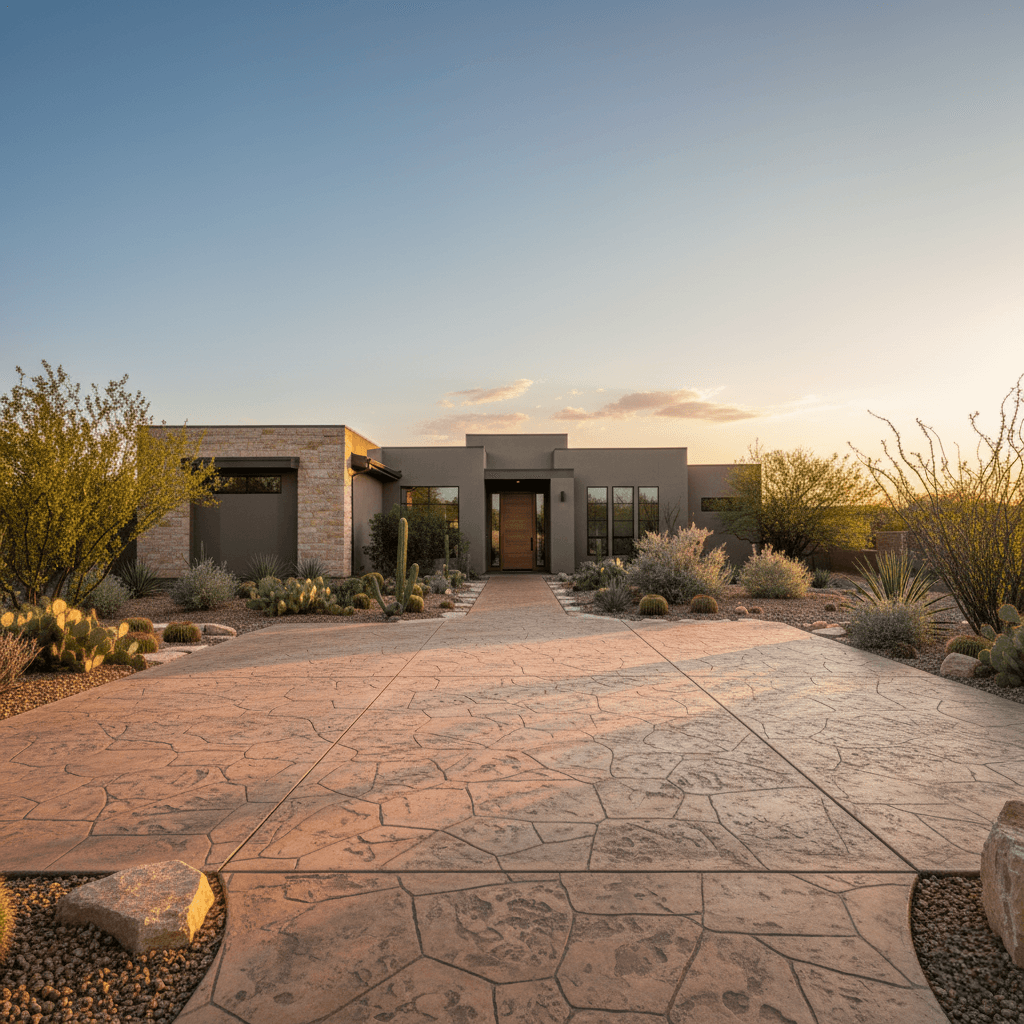
The irregularly shaped, organic forms that are seen in natural stone formations throughout West Texas are captured by flagstone patterns, which create surfaces that resemble those created by nature. Flagstone patterns work extremely well with desert tan, sandstone, and weathered gray color combinations that are similar to the geologic formations that are visible throughout the Permian Basin. The random stone textures used to create these patterns will vary the surface relief and visual interest of the surface, while maintaining the authentic appearance of hand-laid stonework. Ashlar slate patterns create more defined geometric shapes, while still providing a natural stone aesthetic that is ideal for desert landscapes.
Regional Stone Inspiration
The authentic local character that is felt when integrating with the surrounding landscape is provided by Texas limestone patterns that reflect the native stone that is found throughout the region. The warm, earthy tones and subtle grain patterns that are characteristic of regional stone formations are reflected in sandstone textures. Fieldstone patterns create rustic, weathered appearances that mimic the naturally occurring rock outcroppings that are found throughout West Texas. The dramatic surface variations of canyon rock textures mirror the geological diversity of the surrounding desert terrain.
Color Palettes That Complement Desert Environments
Warm, neutral base colors, such as desert tan, provide a foundation for the natural earth tones that are prevalent throughout the Permian Basin landscape. The stunning sunset colors that paint West Texas skies are echoed by terra cotta and burnt orange accent colors, which also add visual warmth to outdoor living spaces. Bright, inviting surfaces that reflect heat and maintain comfortable surface temperatures during hot summer months are created by sandy beige and cream combinations. The native desert vegetation that surrounds homes in Midland is complemented by sage green and dusty blue accent colors, which add subtle color variation to the natural palette.
Multi-Tone Design Strategies
Natural-looking depth and dimension are created by graduated color schemes that transition from light to dark tones within the same color family. Authentic weathered appearances that mimic naturally weathered stone surfaces are created by antique release agents that add realistic aging effects to stamped concrete. Rich, varied tones that will not fade or wear away, even under the intense desert sun, are produced by integral color combined with color hardeners. Border treatments using complementary colors define spaces, while maintaining visual harmony with the overall design scheme.
Wood Grain Pattern Options for Desert Modern Style
Weathered wood textures create the warmth and natural appeal of timber, without the maintenance challenges associated with wood in arid desert conditions. Rustic charm that complements ranch-style architecture common throughout Midland is provided by barnwood patterns, while offering superior durability against weather extremes. Sophisticated linear patterns that work well with contemporary desert modern architectural styles are created by cedar plank textures. Coastal-inspired alternatives that feel fresh and contemporary in desert settings are provided by driftwood finishes in gray and white-washed tones.
Southwestern Wood Aesthetics
Aged wood commonly found in southwestern architecture and design traditions is reflected by reclaimed timber patterns. Authentic rustic character that complements the agricultural heritage of the Permian Basin region is provided by hand-hewn beam textures. Vintage charm that pairs beautifully with desert landscaping and native plant materials is provided by distressed plank patterns. Clean, more contemporary appearances, while maintaining natural warmth and visual interest, are provided by smooth wood grain textures.
Geometric and Contemporary Patterns
Clean, modern aesthetics that complement contemporary architecture, while providing practical benefits like fewer joints and easier maintenance, are created by large-format tile patterns. Dynamic surface patterns, without overwhelming desert landscape views, are created by herringbone designs that add sophisticated visual interest through geometric repetition. Unique geometric appeal that works particularly well in pool decks and patio applications is provided by hexagonal patterns. Streamlined appearances that emphasize the expansive quality of desert landscapes are created by linear patterns using rectangular shapes.
Modern Desert Design Integration
Contemporary desert architecture is complemented by minimalist patterns with clean lines, while allowing landscape features to remain the primary visual focus. Bold statements appropriate for large outdoor areas common in desert residential design are created by oversized geometric shapes. A structured organization that works well with formal landscaping designs and architectural elements is provided by grid patterns. Custom scoring techniques can create unique geometric patterns that are tailored to specific architectural features or landscape designs.
Texture Considerations for Desert Climates
Heat reflection is improved by light textures compared to smooth surfaces, helping to maintain comfortable temperatures for barefoot walking during hot summer months. Safety benefits in terms of slip-resistance are provided by textured surfaces around pool areas and water features, while maintaining attractive appearances. Interesting shadow play throughout the day, as the sun moves across the desert sky, is created by deep relief patterns. Subtle textures provide visual interest, without creating surfaces that are difficult to clean or maintain in dusty desert conditions.
Performance-Based Texture Selection
Balancing aesthetic appeal with practical maintenance considerations in desert environments where dust and debris accumulate regularly, medium-depth textures are used. Directional textures can be oriented to complement prevailing wind patterns and reduce dust accumulation in outdoor living areas. Designated zones for different activities, while maintaining visual continuity throughout outdoor spaces, are created by smooth-to-textured transitions. Anti-slip additives can be incorporated into stamped surfaces to enhance safety, without compromising aesthetic appeal.
Pattern Scale and Proportion
Bold design elements that do not appear overwhelming in expansive desert settings are accommodated by large-scale patterns. Intimate character suitable for courtyards, entry areas, and smaller outdoor living spaces is provided by small-scale patterns. A visual hierarchy that directs movement through outdoor areas, while maintaining design coherence, is created by mixed-scale combinations. Harmonious integration with desert environments is ensured by proportional relationships between patterns and surrounding landscape elements.
Site-Specific Scale Considerations
Building scale affects pattern selection, with larger structures accommodating bolder patterns, while smaller buildings benefit from more subtle design approaches. Landscape scale affects pattern choice, with expansive desert views calling for patterns that complement, rather than compete with, the natural scenery. Appropriate pattern complexity based on activity area scale is determined by whether the activity area is an entertainment area or simply a walkway or service area. Visual distance considerations ensure that patterns remain effective when viewed from various locations throughout outdoor spaces.
Maintenance and Longevity in Desert Conditions
The fading, staining, and weather damage that can affect other materials in harsh desert conditions are resisted by sealed stamped concrete surfaces. Simple cleaning and occasional resealing are all that is required to maintain the appearance and performance of these surfaces over decades of service. The degree of dust resistance that a surface exhibits is dependent upon its texture depth and surface treatments, with properly sealed surfaces requiring less frequent cleaning. The stability of color exhibited by these surfaces is dependent on quality pigments and proper sealing that protects against UV degradation common in high-altitude desert environments.
Long-Term Performance Strategies
Preventive maintenance schedules help maintain appearance and extend service life, while minimizing repair needs and costs over time. Ongoing protection against weather, UV exposure, and normal wearise provided by quality sealers that enhance color depth and surface appeal. Proper drainage design prevents water pooling and related problems during occasional heavy rainfall events common in desert climates. Potential issues identified early by professional inspection services are corrected at less cost and are more effective than emergency repairs.
Integration with Desert Landscaping
Transitions between stamped concrete and planted areas should complement the natural growth patterns of desert vegetation and native plant materials in terms of pattern transitions. Color coordination with existing hardscape elements creates unified outdoor environments that feel intentionally designed rather than randomly assembled. Practical benefits, including root barriers and irrigation zone separation, are provided by border treatments that define planted areas. Careful planning of transition zones between different surface materials ensures visual continuity and practical functionality.
Native Plant Compatibility
Both xerophytic plant selections and stamped concrete require minimal water to provide maximum visual impact in desert settings. Proper water management around both planted areas and concrete surfaces during occasional heavy rainfall events is ensured by drainage considerations. Measures to prevent damage to stamped surfaces, while allowing healthy plant growth and development over time, are taken to protect roots. Mulch and gravel transitions provide attractive connections between concrete surfaces and planted desert landscaping near areas, such as the Midland Community Theatre district.
At Midland Concrete Services, we understand how to select and execute patterns that honor the desert landscape, while meeting your specific functional and aesthetic needs throughout the unique environment of the Permian Basin.
LATEST POSTS