
Menu
Midland Concrete Slabs: Soil Prep & Base Requirements
Concrete Slab Midland
Successful concrete slab construction in Midland depends heavily on proper soil preparation and base establishment that accounts for local geological conditions and climate factors. Understanding West Texas soil characteristics, drainage requirements, and foundation specifications ensures long-term structural integrity and prevents common problems like settling, cracking, or moisture infiltration. Professional site preparation involves multiple steps, including excavation, soil analysis, base material selection, compaction procedures, and reinforcement installation. The entire subbase and base system should be at least 4 inches thick—thicker if the engineer feels it is needed for proper support. Local soil conditions, particularly clay content and expansive characteristics, significantly influence preparation methods and material choices that determine project success and longevity.
Understanding Midland Soil Conditions
Midland, Texas soil types create unique difficulties for the construction of a concrete slab that necessitate special preparation practices. Due to the expansive nature of clay soils that are prevalent in the Midland area, these soils expand when wetted and contract during dry periods. This movement causes damage to concrete structures unless proper preparation and design factors are considered.
Clay soils are cohesive soils; this means that if you grab a handful of wet clay, you can make a rope out of it. Some clays expand when wet and shrink when dry, so they are quite problematic as sub-grade materials. Knowing what type of soil is at a job site allows you to know how to prepare and reinforce the job site accordingly.
Caliche layers are a hardened calcium carbonate formation that can serve as a solid base for a structure when identified and used correctly. Caliche varies greatly in terms of depth and consistency depending on where the caliche is located. Therefore, it is essential to hire a professional to perform a test of the soil to determine whether it is suitable for supporting a structure.
Sites such as the historic Yucca Theatre, which was built in 1929, show long-term performance of a structure in the soils of the Midland area. These sites provide an excellent example of the best way to construct a successful structure in the Midland area.
Soil Testing and Analysis
Professional soil testing will identify the key characteristics of the soil at a job site, including bearing capacity, moisture content, potential for expansion, and drainage characteristics that will affect the design of the foundation. Laboratory testing will provide recommendations for the excavation depth, base material required, and reinforcement necessary for each job site based on the soils found there.
Excavation and Site Prep
Proper excavation is the first step in constructing a successful concrete slab. The excavation process addresses drainage, utility placement, and structural requirements. The depth of the excavation depends on the intended use of the slab, the soil conditions, frost protection needs, and local building codes. Typical residential applications require excavation depths of 8-12 inches below finished grade to allow room for the base material and slab thickness.
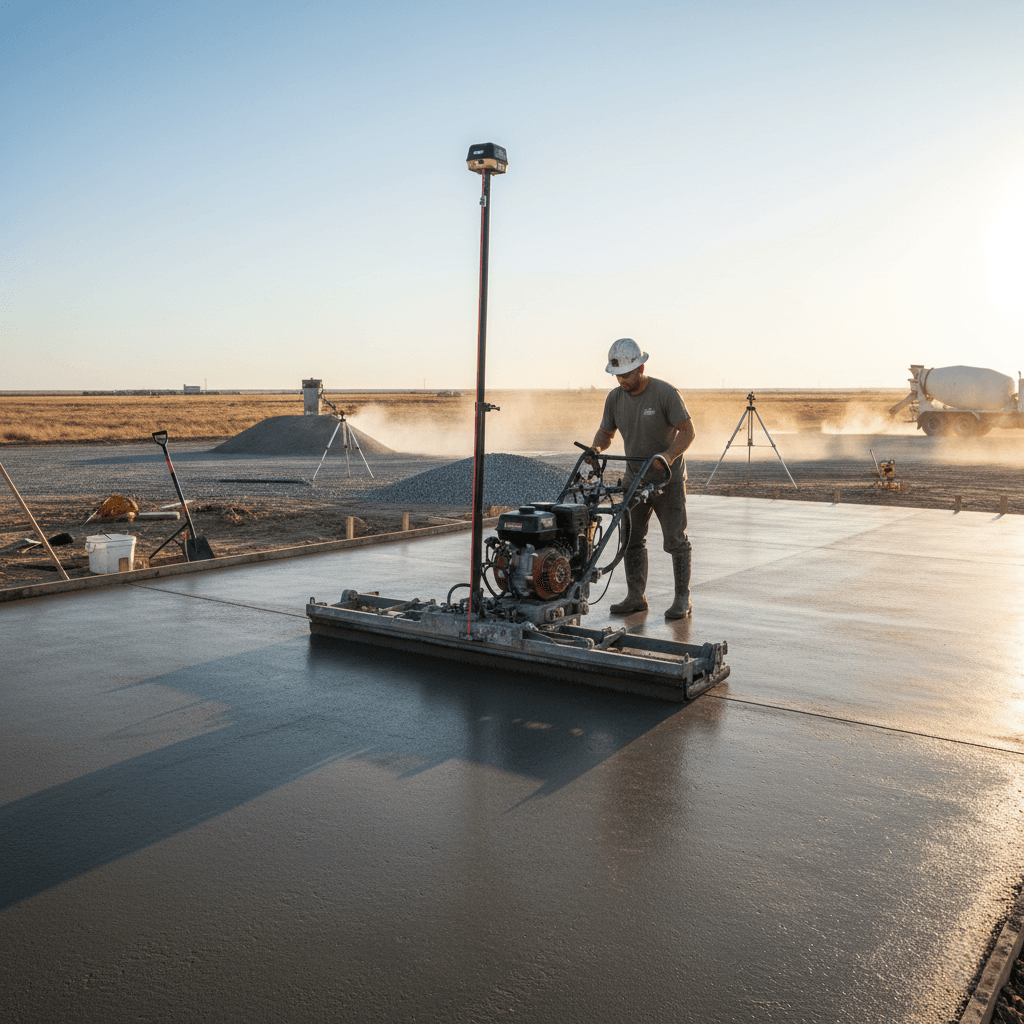
Final grade is prepared after excavation has been completed to direct water flow away from the concrete and to establish uniform support for the slab. Local building codes require a certain amount of slope for drainage purposes and to prevent water accumulation that can undermine the structural stability of the slab. Contractors utilize laser levels and surveying equipment to accurately grade the site to meet engineering specifications.
During excavation, it is essential to coordinate with the utility companies to locate underground electric, plumbing, and gas lines to prevent damage to the existing services and to ensure that new utilities are placed underneath or next to the concrete slabs in the correct manner.
Examples of successful integration of utilities and structural systems, such as those used at the Cole Theatre, which is part of the Midland Community Theater, demonstrate the proper planning and implementation techniques to avoid conflict between these systems in difficult soils.
Excavation Safety and QC
Safety protocols must be followed during the excavation process to protect personnel, including proper shoring and slope stabilization, and to control traffic through the excavation area. Quality control measures are used to ensure that the surface of the excavation meets the design specifications for elevation, compaction, and material composition before the start of the base installation process.
Base Material
The base material selected for a project plays a significant role in the performance and durability of the concrete slab. The base course material should be compactable, easy to trim, and granular fill that will be stable and able to withstand construction traffic. According to ACI 302, “Concrete Floor and Slab Construction”, the recommended base course material has 10 to 30 percent fines (material passing the No. 100 sieve) with no clay, silt, or organic material.
Gravel is a processed aggregate that offers the ideal characteristics for use as a base for a concrete slab due to its ability to drain well, provide stability, and be compacted. Suppliers in the Midland area offer a variety of aggregates, including crushed limestone, recycled concrete, and manufactured gravel that meet project specifications and offer a cost-effective solution.
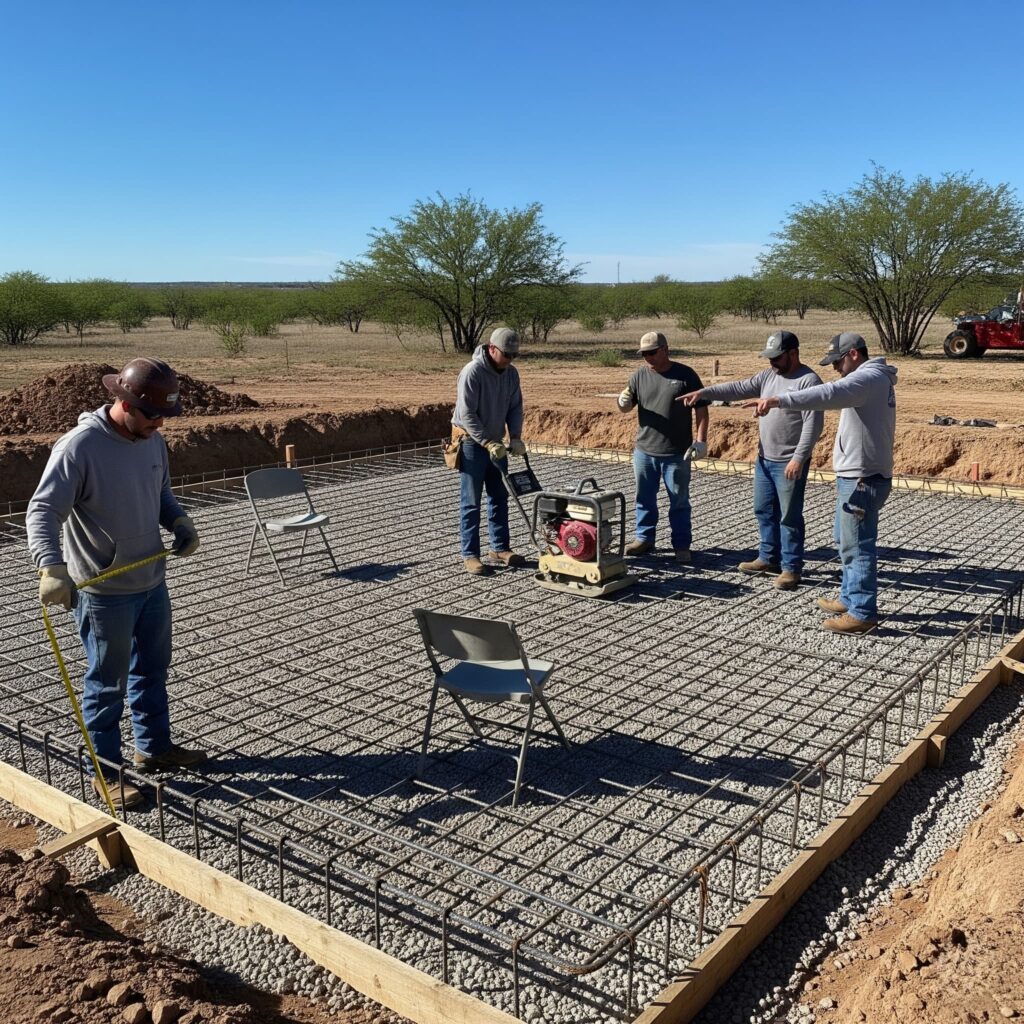
Installation of the base material involves laying the base material down in lifts of 2-4 inches and compacting each lift thoroughly before installing the next lift. Compaction is essential to create a dense, stable base that evenly distributes loads and eliminates settlement.
Recycled Materials
Recycled materials are becoming increasingly popular, as they often offer cost savings while still meeting performance requirements. Crushed recycled concrete aggregate is a viable option for use as a base material.
Compaction Standards
Compaction testing is used to verify that the base materials have reached the required density that will support the loads imposed by the concrete. Contractors utilize nuclear density gauges or sand cone tests to verify that the compaction meets the engineering specifications prior to placing the concrete.
Moisture Management and Drainage
An effective drainage system prevents water accumulation beneath the concrete slab that can lead to settlement, frost damage, or other issues related to moisture within a structure. Properly graded site directing water flow away from the foundation and subsurface drainage, managing groundwater and soil moisture affecting the structural stability of the foundation.
Perforated piping systems and drainage aggregate are examples of subsurface moisture management systems that can be used in areas with poor drainage or high groundwater tables. Subsurface moisture management systems require careful design and installation to operate successfully throughout the life of the concrete slab.
Vapor Barriers
Plastic sheeting, usually 6-mil polyethylene, used as a vapor barrier, will prevent moisture migration from the soil into finished space when installed with sealed joints and adequate overlap of the sheeting.
Moisture Protection
In areas that are prone to flooding or seasonal water accumulation, consideration must be given to waterproofing measures. A professional evaluation will determine the best method to address moisture protection issues, taking into account the local environmental conditions and intended slab use.
Climate Specific Drainage Requirements
Extreme weather conditions, including intense rainfall and drought, can impact the effectiveness of drainage systems. In addition, seasonal moisture fluctuations in clay soils emphasize the need for consistent moisture management of the foundation system.
Reinforcement
Steel reinforcement provides tensile strength to prevent cracking and improve the performance of the concrete under varying loading conditions. The placement of rebar, wire mesh, and fiber reinforcement each provides different benefits depending upon the requirements of the application and structural specifications.
Standard residential concrete slabs typically include #3 rebar at 24-inch centers or wire mesh reinforcement to control shrinkage cracking and provide structural continuity. Applications that require heavy loads may require larger rebar diameters, tighter rebar spacing, or post-tensioning systems that will enhance crack control and distribute loads more evenly.
Accurate placement of rebar is essential to provide sufficient concrete cover that will protect the rebar from corrosion while preserving the structural integrity of the slab. Reinforcing systems include dobbies, chairs, and bolsters to maintain the position of the rebar during the placement and finishing of the concrete.
Post-Tension Systems
Post-tension systems provide better performance than other reinforcing systems for slabs constructed over expansive clay soils common in the Midland area. Post-tension systems will apply compressive forces to the concrete that will counteract the tensile forces resulting from soil movement, thus reducing cracking and maintaining the structural integrity of the slab.
Reinforcement Requirements
Reinforcement materials must meet the ASTM requirements for strength, ductility, and resistance to corrosion. Careful handling, storage, and installation of the reinforcement will prevent damage to the material that would result in compromised structural performance or durability.
Thickness of Slab
The thickness of the concrete slab will depend upon the intended use, the soil conditions, the loads to be supported, and the local building codes. Residential applications typically require slabs that are 4-6 inches thick, while commercial or industrial applications may require slabs that are 6-12 inches or more thick, depending on the load requirements.
For example, if you are going to place heavy vehicles or RVs on the slab, you will want to build your forms to produce a 5″ thick slab of 2800 psi concrete—or thicker, depending on your load requirements. Higher-strength concrete provides greater durability and load-carrying capacity while allowing for thinner slabs in many cases.
Joints
Control joints and expansion joints are used to prevent random cracking of the concrete by providing pre-determined failure points for the concrete to move. The spacing, depth, and detailing of the joints require careful attention to prevent water infiltration while maintaining the structural integrity of the slab.
Edge Treatments
Edge treatments, including thickened edges, turned-down footings, or perimeter beams, provide additional structural support and prevent edge loading that can cause the slab to fail or settle.
Distribution of Loads and Support
Equal distribution of support will prevent localized loads that can cause cracking or settlement. Professional designs consider both dead loads (permanent structural elements) and live loads (temporary or changing loads) to ensure the slab has the capability to carry the loads imposed throughout its service life.
Environmental and Climate Factors
The West Texas climate significantly influences the timing of concrete placement, curing, and the long-term performance characteristics of the concrete. High temperatures, low humidity, and extreme sunlight can accelerate the rate of moisture loss during the curing phase, thereby potentially lowering the final strength and durability of the concrete.
Temperature control during the placement of the concrete will prevent thermal shock that can cause cracking or lower the bond strength between the concrete and the rebar. In cold weather conditions, heating systems, insulation, or chemical accelerators can be used to promote proper curing.
Protection From the Wind
Wind protection during the finishing process will prevent rapid moisture loss from the surface of the concrete that can result in surface defects, plastic shrinkage cracking, or poor surface finish. Temporary windbreaks, misting systems, or evaporative retardants can be used to maintain the proper curing conditions.
Timing of Projects
Seasonal timing will impact both the scheduling of the project and the long-term performance. Spring and Fall are generally the best times for concrete placement. Summer and Winter require additional precautions and specialized techniques to ensure quality results.
Factors Affecting Long-Term Performance
UV rays, freeze/thaw cycles, and chemicals from de-icing agents or industrial processes can affect the durability of the concrete over the years. Protective coatings and/or surface treatments, along with regular maintenance, will help extend the performance of the slab throughout its expected lifespan.
Quality Control and Inspection
Systematic quality control throughout the preparation and base installation of the soil will ensure compliance with the design specifications and industry standards. Routine inspections at critical construction phases will detect potential problems before they turn into costly corrections or performance issues.
Testing will verify that the soil has achieved the required compaction, base material properties, reinforcement placement, and concrete quality as called for by the project specifications. Documenting all aspects of the project will provide valuable reference for future warranty claims and maintenance planning.
Experienced contractors understand potential problems and resolve them before they become major issues and delay the project.
As experienced contractors in the Midland area, we at Midland Concrete Services strive to provide our customers with the most professional and technologically advanced service possible to complete their concrete slab projects. Our thorough approach to preparing the soil and installing the base will ensure a durable and long-lasting slab that will satisfy the unique challenges of the West Texas construction environment and provide a strong foundation for all residential, commercial, and industrial applications in the Midland area.
LATEST POSTS