
Menu
Pouring Concrete Foundations: Permits and Codes in Midland, TX
Pouring Concrete Midland
Successfully pouring concrete foundations in Midland requires a thorough understanding of local building codes and permit requirements that protect homeowners and ensure structural integrity. The City of Midland follows the International Residential Code (IRC) and International Building Code (IBC) with specific local amendments addressing West Texas soil conditions and climate challenges. We at Midland Concrete Services navigate these requirements daily, ensuring every foundation project meets or exceeds all regulatory standards. Professional contractors must be licensed and bonded with the city before obtaining permits for any foundation work. Understanding these regulations from the start prevents costly delays and ensures your project proceeds smoothly through all inspection phases.
Midland Building Permit Requirements
Building permits are required for all residential building projects, such as new construction, additions, and major renovations, which affect structural elements in Midland. Permits can only be obtained by either the owner of the property, or their registered, with the City of Midland, bonded, as defined by the Texas Insurance Department, and licensed contractor. All of the required structural plans, soil reports, and engineering specifications must be prepared and sealed by a Texas-licensed engineer for submittal to the City of Midland as part of the permit application package. The cost of obtaining a building permit will depend on the size and complexity of the foundation project. However, typical costs will be between $500 and $2,000.
Application Process and Timeline
A permit application is initiated when the applicant submits their plans and documentation electronically or personally at City Hall. Twenty-five percent of the permit cost is paid upon the submittal of the plans, and the remaining seventy-five percent is due upon approval of the plans. For residential foundation projects, the city’s plan review process generally takes five to seven business days. However, more complex designs may take longer. Construction on a project must begin no later than 180 days after the date of permit issuance and cannot cease for more than 180 continuous days; otherwise, the permit will expire.
International Residential Code Compliance
The City of Midland has adopted the 2019 International Residential Code with local amendments to address regional conditions. The frost-line requirements for Midland are lower than those found in Northern climates. Therefore, foundations can be built shallower in Midland compared to other parts of the country. The minimum compressive strength for concrete used for residential foundations is 2,500 psi. Higher strengths are required for certain types of soils or structural loading conditions. Reinforcing steel must be installed in accordance with the International Residential Code and include wire mesh and/or rebar. Joints must also be installed to allow for soil movement and to help prevent cracking in the concrete.
Local Code Amendments
The local amendments to the International Residential Code for Midland are primarily related to expansive clay soils found in the Permian Basin region. In some cases, post-tensioned slabs or additional reinforcing may be required in addition to standard foundation designs. Designs for foundations should also consider the potential for soil movement and include moisture barriers to keep water out of the foundation. Local wind-load requirements are established to account for extreme weather conditions, such as high winds and rare severe thunderstorms.
Inspection Requirements and Schedules
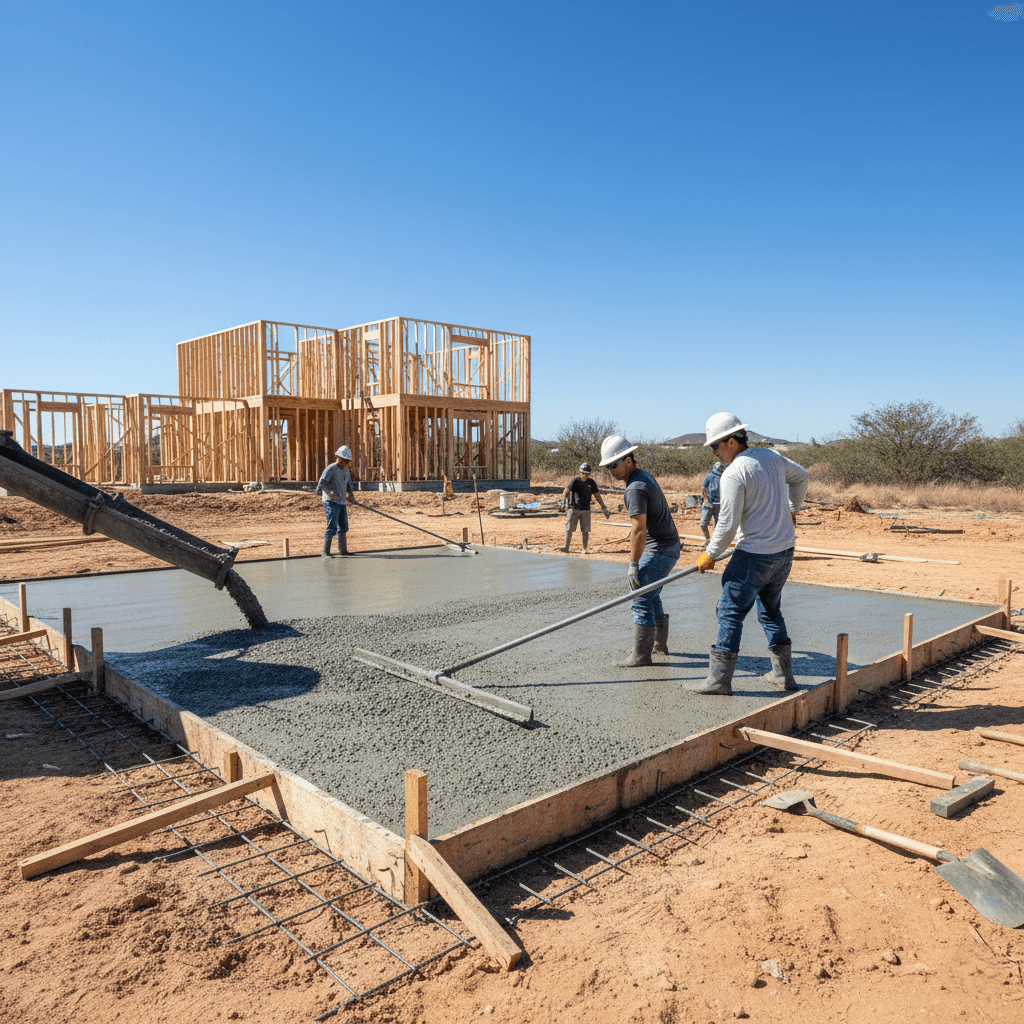
Certified City Inspectors conduct several mandatory inspections during the construction of a foundation to ensure compliance with the International Residential Code. A pre-pour inspection verifies that the excavation is to the correct depth, rebar and/or wire mesh have been correctly placed in the footing forms, and the forms are ready for concrete placement. An inspector may observe the concrete placement to ensure it is being done correctly, is consolidated properly, and is consistent with the approved plans. The final inspection confirms that the slab has been cured properly, joints have been installed, and that the workmanship is acceptable before an occupancy permit is issued.
Important Inspection Time Periods
Footings are inspected before the placement of concrete to ensure that the footing is to the correct depth and width, and reinforcing steel is correctly placed according to the approved plans. Slabs are inspected to ensure that the vapor barrier has been installed correctly, reinforcing steel has been correctly placed, and that the base has been properly compacted and prepared with gravel. Post-tensioned foundations require additional inspections of the cables, how they were tensioned, and how well the post-tensioning system was encapsulated. Each inspection must approve the work before proceeding to the next stage of construction.
Foundation Types and Code Requirements
Monolithic slab foundations are the most common type of foundation in Midland because the area has favorable soil conditions and a moderate climate. Monolithic slab foundations must be at least six inches thick and contain integrated footings designed to support the local bearing capacity of the soil. Stem walls may be required for projects with difficult drainage or where additional vertical space is needed above grade. Pier and beam foundations are less common in Midland but may be required for specific soil conditions or architectural requirements.
Reinforcement and Materials Used
Standard reinforcement requirements call for the use of #4 rebar placed according to the International Residential Code; however, additional reinforcement may be required for areas with soil movement. Concrete mix designs must include air entrainment to provide freeze-thaw resistance and must include suitable admixtures for hot-weather placement. Vapor barriers must be installed underneath all concrete slabs to prevent moisture migration into the structure and potential indoor air-quality issues. Control joints must be properly designed and located to allow for concrete shrinkage and prevent random cracking in the concrete.
Soil Conditions and Engineering Requirements
The soil conditions in the Midland area, specifically around the Permian Basin Petroleum Museum and downtown Midland, vary greatly and therefore must be evaluated properly via geotechnical testing before designing the foundation. Expansive clay soils commonly found in the region require specialized foundation designs, such as deeper footings or post-tensioned slabs, to accommodate soil movement. Tests for soil bearing capacity will determine the size and amount of reinforcing required for the foundation. All professional soil reports must be signed by a Texas-licensed engineer and included with the permit application for all foundation projects.
Dealing With Difficult Soils
Specialized foundation systems must be designed to accommodate seasonal soil movement without causing damage to the structural components of the building. Depending on the soil conditions and recommendations of engineers, chemical stabilization, moisture control systems, or specialized foundation designs may be required. Adequate drainage around foundations will help prevent water accumulation, which can exacerbate soil movement and subsequent foundation settlement. Contractors installing foundations in Midland must be aware of local soil conditions and apply the proper construction techniques to ensure long-term structural stability.
Contractor Registration
Before beginning any permitted work in the City of Midland, all contractors installing foundations must register with the City. Registration requirements include providing evidence of current licensure and bonding with the State of Texas, liability insurance, workers’ compensation insurance, and demonstrating competence in constructing foundations. Continuing education is required to aensurethat contractors remain knowledgeable about any changes to the International Residential Code and the best methods of constructing foundations in the local conditions.
Quality Assurance and Warranty Information
Registered contractors generally provide warranty information on their work and materials for periods of 1 to 5 years. Quality assurance measures used by contractors include proper concrete testing, verification of rebar and/or wire-mesh placement, and compliance with the approved construction schedule. Contractors must maintain records of all concrete deliveries, including the type and quantity of materials delivered, along with weather conditions and any other relevant information, for inspection and warranty purposes. Proper curing procedures are crucial to achieve the design strength and long-term durability of concrete in the West Texas climate.
Budgeting and Cost Estimates
The average cost to construct a foundation in Midland ranges from $6 to $14 per square foot, depending on soil conditions, foundation type, and the complexity of the project. In addition to the cost of constructing the foundation, property owners must also factor in the costs of obtaining a permit, hiring engineers, and paying for inspections, which can add a thousand dollars to three thousand dollars to the total project cost, depending on the size and complexity of the foundation. Projects requiring post-tensioned foundations or specialized designs for problematic soils may also incur increased costs, although these costs will provide long-term performance advantages.
Long Term Value and Investment Protection
Foundations constructed to meet all applicable building codes and regulations will provide long-term value and protect against expensive future repair costs. Well-designed and constructed foundations will also enhance property value and ensure structural stability for many years with minimal maintenance requirements. Property owners who hire experienced professionals who are knowledgeable about Midland-specific conditions will ensure that their foundations will perform optimally and meet all local regulations. Investing in quality foundation construction will result in significant savings through reduced maintenance costs and improved structural reliability over the life of the building. To ensure that each foundation project completed in Midland complies with all permit requirements and applicable codes, Midland Concrete Services provides expert foundation construction services that will provide your family with the structural integrity you deserve for generations to come.
LATEST POSTS